Cold, Wet and Well Behind.

May 16th, 2012

For the last week or so I’ve been in Maine, USA for a family wedding. I left a cold, wet England hoping to return to warm, dry conditions. A place where my seedlings were germinating and I could look forward to some harvests.

Alas, it was pissing down at Heathrow when I landed yesterday. We might get a frost tonight. I’m told the temperature was lower when I left for America than it was on Christmas Day. None of this is doing much good for my seed sowings and I don’t know about you, but things feel very behind this year.

Beets and Perp Spinach No Show
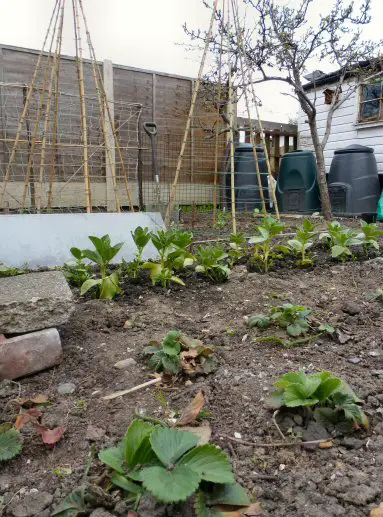
During the second week of April, I sowed beets and perpetual spinach. For me, these are two gimmes of the veg world, they just never fail – except this time. Over a month later, and no signs of germination.

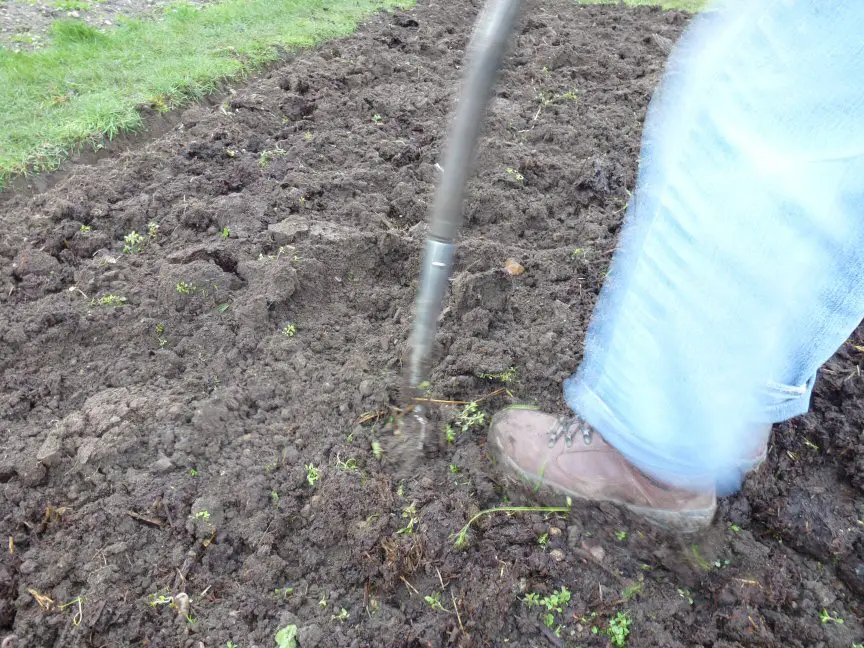
Whilst weeding, I’ve noticed that the soil is still very chilly, and I can only blame this for my seed failure.

What I Harvested in May 2011
A quick look back at my Real Men Sow Veg Savings Spreadsheet from 2011 shows that this time last year, I was harvesting spring greens, outdoor sown lettuce and even strawberries. No such luck this year. The only lettuce I’ve harvested so far has been under a cloche. As for the strawbs; there are plenty of flowers all of a sudden, but I reckon a few weeks will pass before I get to munch on these succulent summer treats.

Slow Broadies and Peas
I’ve only got a few flowers on my very slow broad beans and my peas are only a foot or so high (a foot higher than they normally get though!). The hungry gap that I glumly guest posted about on Tom’s Hapless Gardener website looks like it’s going to be extra long this year.

A good catch up suggestion came from @pixie1nigel via Twitter, who suggested resowing indoors and weening straight to a cloche or cold frame to grow on. Cheers Nigel, I reckon I might be doing that…

Weeds!
To add insult to injury, the blasts of rain that have besieged the UK are really helping the weeds take over. They love the conditions, and keeping on top of them is nigh on impossible at the moment. Add trying to move house to a holiday and you’ve got a recipe for a weed ridden plot. Things looked so rosy a few weeks back. If it wasn’t for my mum, who has been sneaking down the plot as much as she can, I’d be returning to a weed jungle. Thanks mum, you’re the best.

One thing I’ve learned is that allotmenteering is one of those hobbies that you daren’t put down. I can see how people new to the pastime get downhearted when the mood of a plot can change so quickly.

Reasons to Be Cheerful
Fortunately, it’s also one of those hobbies where good news is never far away either.

I’ve got some good lettuce leaves that I’ve grown under a cloche, which has got me dreaming of all the things I can do with my greenhouse when I get it, and after 4 years my rhubarb is coming of age and beginning to give me proper grown up stalks.

My gooseberry plants are laden again, my potatoes haven’t rotted in the heaviest April rain fall on record and there are raspberry shoots popping up all over the place.

It hasn’t rained today either. In fact the sun even came out.

Good things come to those who wait, and all that.

Posted by Jono in allotment chatter, spring. There are 2 Comments »

______________________________________________________________________________


Eight Veg for the Hungry Gap

May 5th, 2012

This week, I’ve been writing a guest post for Tom at the very funny Hapless Gardener. Tom runs a regular series called the Guest Bed, where bloggers from elsewhere in cyberspace write about a feeling they experience in the garden or allotment.

Stuck bang in the middle of the Hungry Gap, I chose ‘glum’, and went on to bemoan the bareness of my plot now the winter veg has all but gone, and the spring replacements are still finding their feet.

This got me thinking about planning for 2013’s Hungry Gap. A long way off, I know, but I really don’t want to be relying on perpetual spinach (as much as I love it) and rhubarb as my sole allotment contributors this time next spring.

So, these are my top 8 veg to keep us going during the Hungry Gap. For my next trick, I’ll try and get them all to grow succcesfully at the same time…

Asparagus
One of the tastiest crops to grow, and coming into season right about now. It’s a perennial as well, so once you’ve planted the crowns, they’ll keep coming back every year.

Sounds perfect, apart from the small matter of a good asparagus crown taking 2 years to mature to a level where you can harvest the spears, and even the they’re sparse. Good things come to those that wait though.

Unfortunately, my asparagus doesn’t look like the spears in the picture. Maybe one day…

Squashes
Squashes are amazing. They’re keepability never ceases to amaze me. I’ve still got three left from last summer, happily stored in no more a complicated fashion than on my living room shelf.

I harvested them towards the end of October, and over 6 months later they’re still as tasty. Grow loads, and enjoy them all through winter and into spring.

Leeks
Last year, I harvested leeks up until the end of May. I’ve found leeks will happily sit in the ground and suffer no detrimental effect to their taste or quality.

When I consider that I plant the little seedlings out in May, it makes me wonder if they have the longest time sat in the ground and available of all veg on the plot?

Purple Sprouting Broccoli
PSB is a favourite in my house, and adds a welcome dose of colour to the plot as well as nutrition during these barren couple of months.

What’s also great is that you can buy an Early Sprouting and a Late Sprouting, which should cover you from late winter until the end of spring.

Rhubarb
Oh, wonderful rhubarb. How I love rhubarb, especially as it arrives just when my frozen fruit has run out and I’m desperate for something fresh.

Like asparagus, rhubarb will come back each year once planted. The sugary sticks are great fun to cook with too – there are all manner of exciting things to do with it, from ice cream to cake, and jam to trifles.

Spring Greens
I sow a row of spring greens (Hispi or January King are very reliable) in Autumn to over winter, and they’ve never let me down yet. Tough as old boots against the weather, but tender on the plate.

They can be left to heart up into cabbages, but I prefer to pick the young leaves as spring greens instead, which is handy as the ones I do leave always turn out rubbish. Pick the little leaves while you can, I say.

Perpetual Spinach
This variety of chard really is made for endurance. My present row has been in since last summer and seems intent on living forever. Just when I thought the snow and cold had killed it off, the spring perked the leaves up and now they look better than ever.

Going beyond the Hungry Gap, a spring sowing followed by a late summer one will ensure perpetual spinach all year round.

Curly Kale
Last, but not least, some curly kale won’t go amiss to complement the perpetual spinach. As a cut and come again vegetable, the more you pick during the winter, the more it comes back. Small, baby shoots will also start growing on the stalked varieties of kale (pictured), and can be used in salads.

And if that isn’t perfect enough, there is even a variety called the Hungry Gap.

Posted by Jono in spring veg. There are 3 Comments »

______________________________________________________________________________


My Heroic Herbs

April 28th, 2012

Back in September, I blogged about my little rosemary and thyme plants, and wondered as to whether these young guns would make it through an English winter.

My herb patch is actually in the garden at home, and as well as the thyme and rosemary, contains sage, parsley, chives and mint. Last year, I bought a sage plant, planted rosemary cuttings and sowed the thyme, chive and parsley from seed. I grew them in pots before transplanting them. The mint came from my mum’s garden, and mint being mint, has popped up everywhere.

I’ve not had much luck growing herbs in the past, so was over the moon that the cuttings took and the seedlings were happy in their new surroundings. However, as such fledgling plants, I was really worried that winter might see them off.

The winter of 2010/11 was responsible for the death of a thriving sage plant, as well as my rosemary. The snow was the main perpetrator, assisted by a prolonged period of minus temperatures that we rarely see in this corner of the country.

Good News
Fortunately for my herbs, this winter has been much more accommodating. The mild temperatures and isolated cold snap have been kind to the plants, and I’m pleased to report that all are present and correct. In fact, I’ve used handfuls from all six herb plants whilst cooking already this year, and even better, they all seem to be growing.

My sage has gone nuts, and while the growth of the rosemary, thyme and parsley is much steadier, it is there if you look closely, honest. I have been picking my parsley quite a lot (that translates into decimating the poor thing) which perhaps I shouldn’t have done. Its bare now, but hopefully the pickings will encourage more new shoots.

The herbs occupy a sheltered area in my garden, up against a fence and a bench, but I still think they’ve shown real guts. The heroic efforts of my baby plants when facing up to the winter has left me feeling a great deal of affection for them.

A New Challenge for the Herbs
Therefore, I feel that I can’t leave them there when I move house in the next few weeks, which means a new challenge for the plants. I’m now going to attempt to transplant them again, this time into pots, ready for their new home.

Should they do okay in the pots, good things await them. My new house (more on that later) comes with a greenhouse ( a real deal sealer if there ever was one), which means next winter they can be moved inside when the cold comes. Luxury accommodation compared to their location this winter.

If anyone has got any tips to give the plants a good chance of survival, I’d love to hear them. I might mix some homemade compost in with the multi-purpose stuff when I pot them up, but I don’t want to make the soil too rich.

Fingers crossed…

Posted by Jono in herbs. There are 4 Comments »

______________________________________________________________________________


Perpetual Spinach is My Favourite Allotment Crop

April 23rd, 2012

I know we need the rain. I really do. But by Jove, it’s really miserable.

In an attempt to cheer myself up, I nipped to the plot after work to harvest something – anything – to go into my dinner. I was greeted with not very much. This year, I’m well and truly stuck in a hungry gap.

However, just when all was lost, I remembered my healthy, hardy and prolific perpetual spinach. Whilst all around is bare, this good old, reliable chard just keeps on going.

As I picked myself a generous handful of the green leaves, I realised that I haven’t bigged up perpetual spinach for a while. Normally, I’m on a one man crusade to get all and sundry growing and eating this leafy chard.

Singing the Praises of the Underdog
There are all sorts of exotic, delicious and exciting things to grow on an allotment. Squashes, tomatoes and strawberries are all examples of traditional headline grabbers, but I think its perpetual spinach that does it for me. It’s certainly not glamorous, but I’ve always loved an underdog, and after this evening’s plot visit, I’ve come to the conclusion that this underrated veg is my favourite of the lot.

What about the dainty raspberry, that archetypal English summer treat, I hear you cry? Or the amazing, blink or you’ll miss it asparagus? Well, I’m a sensible chap. I like something I can depend on; something that’ll be there when nothing else is.

Sow it Now!
So, I thought I’d give perpetual spinach some more blog love, especially as now is the perfect time to sow it.

I sowed some seeds about a fortnight ago, to cover me for Summer and Autumn, and I’ll sow again around August / September to provide me with leaves for Winter and next Spring.

Perpetual spinach is so easy to grow too. There really is no magic formula. Sow as normal, sprinkling seeds generously and cover with soil. I don’t even bother thinning out, but the seedlings don’t complain at all if you want to try transplanting them for maximum crop.

It’s a fast grower, and I’ve harvested within a month of planting during peak summer months.

This is notwithstanding all the other reasons to grow perpetual spinach either. It’s nutritious, and incredibly versatile, especially for padding out dishes with a healthy, colourful addition.

If used instead of real spinach, this chard alternative is a surprising money saver. Last year, it saved me £28.67 during my money saving experiment. Being a cut and come again variety, the more you pick, the more it produces too.

If you do nothing else this coming weekend (it’ll probably still be raining), sow some perpetual spinach seeds. I promise you won’t regret it, and the little tiny seeds will pay you back again and again.

Posted by Jono in summer veg, winter veg. There are 6 Comments »

______________________________________________________________________________


Am I a New Traditionalist and Keeping Up With the Allotment Joneses

April 19th, 2012

This week, Tom at the very funny Hapless Gardener blog posted about the state of his lawn. Tom opened up and admitted that his lawn was ‘embarassing’, and ‘…in desperate need of a tidy up’.

As I was reading Tom’s post, I started to think about the neatness (or un-neatness) of my allotment, and how interesting it is to spy on the style and condition of other people’s plots. It’s fascinating to take a walk around and try to second guess the plotholder’s character and experience by their allotment.

The Neat and Tidy People
There are a few very neat and tidy people down at the Burnham plots. I have to say that they put me to shame, and I take many an envious glance, admiring just how precise, logical and well-kept these allotments are.

And what’s more, everything seems to grow so well. Maybe it’s years of experience, maybe its military organisation, maybe it is a bit of both – but the plots look like slices of vegetable growing perfection.

There was no greater exception than the old boy just down from me, who sadly died last year. His grass was always cut, and resembled a bowling green. There was never a single weed and all his veg looked healthy and prolific. I guess the older chaps have the time to keep on top of things, mostly being retired.

That said, there are some people who just ooze organisation and neatness. Merv, another nearby plotholder is like this. His half plot is pristine, and he claims he only ever spends a couple of hours a week down there. In fact, all I ever witness Merv doing is a little gentle raking on a Sunday morning whilst wishing me ‘Happy Gardening’ from down the row.

Maybe size matters – less is more when it comes to keeping on top of things, or maybe Merv’s a fibber and actually spends a lot more time at the allotment than he lets on…

The State of My Plot
My plot, on the other hand, always seems to be tarnished by one scruffy bed where I can’t quite keep up. At the moment, everything is weeded, dug and looking ship shape for sowing except weeds in my containers (pictured) and all through the fruit bed. This is full of weed from where I’ve been focusing on preparing the other beds .

Solace comes from spotting that I’m now alone. A walk around quickly shows up those of us who don’t have as much time, or (whisper it) are a tad on the lazy side (yes, that’s me too…).

The Traditionalists and the Newbies
I also love spying on what people are growing. There are quite a few traditionalists around me, who stick to their staples: onions, greens, potatoes and carrots. They know what they like, so they’re not messing around. If you can’t eat it with a pork chop, it doesn’t make the cut.

At the other end of the spectrum are the enthusiastic newbies, who grow anything that they can get their hands on at the garden centre. I remember this time fondly, although it almost bankrupted me. I was like a kid in a sweetshop. On my first trip to the garden centre, I spent over fifty quid on seeds.

What Am I?
Somewhere in the middle of these two allotment types is me. After last year’s money saving experiment, I’m beginning to focus on what is good for me to grow, like the traditionalists. I’m starting to grow more of what we enjoy eating, rather than using up space for rarely used, cheap to buy veg like carrots.

At the same time, I still get excited by buying seeds and trying out new stuff, just like I did when I started out. I love growing different squashes, which are rare on our plots, and the two favourite new veg I grew last year were the delicious cavolo nero, and the hardy, spiky oriental greens.

As I sit on my allotment bench, I’m left to wonder what this all means in relation to me and my plot. What am I, in the grand allotment scheme? I’m fairly conventional, but am I untidy? Lazy? A man with too big a plot? Do I have unrealistic expectations?

Or maybe I should coin a term? Could I be a Newbalitionalist? A Trad-Newb? Newbytrad?

A New Traditionalist?

Hmmm. I could go on. Perhaps I’ll just say I grow veg, and get on with that weeding.

Posted by Jono in allotment chatter. There are 5 Comments »

______________________________________________________________________________


My New Favourite Game: Taking Cuttings from Gooseberry Bushes

April 10th, 2012

I have a new favourite game on the allotment.

The game doesn’t have a name at the moment (suggestions welcome!), but comprises of a poke around my gooseberry bushes to see if any have rooted themselves. It doesn’t feel dissimilar to a treasure hunt, and for me it’s one of the most exciting plot jobs.

Self Rooting
They root on their own, but I only realised this when I stumbling across a self rooting branch while weeding a manuring a bush. Discovering this was the first step for me on the way to learning how to take gooseberry cuttings. I’ve since found out that a bush can be encouraged to root, and an easy way to do this is trap a long branch against the soil with a large stone. I normally try to find a branch that is long enough to trap about half way down.

Potting Up a Cutting
Over time, the bud will start to root. Check back a couple of months after you’ve set it down against the soil to see how it is doing. If the branch has rooted, cut it away from the bush and dig out around the new root. You need to be very careful at this point, as the root will be delicate. Keep plenty of soil around the root. I then pot it up in some multi purpose compost mixed with some of my own compost.

Be Gentle!
Unfortunately, I am too much of a clutz for this gentle process, and often rip the root away from the ground. I was checking a branch this weekend, and ended up pulling it out. Fortunately, I found two more hidden away, ready to be potted up. I left them to mum this time.

Watch out when handling the branches though, as they are prickly and can easily draw blood.

In true Blue Peter fashion, the pictures shows some I made earlier. The one on the right is two years old now, and even fruited a single gooseberry last summer.

With gooseberry bushes about a tenner to buy, taking cuttings is another excellent way of saving cash on the plot.

I can’t get enough of gooseberries, and a few more bushes will be great. They’re tasty on their own, and make delicious deserts as well. Gooseberry jam is also my favourite jam, and they freeze well too, so a couple of productive bushes are super for turning produce into all year round gooseberry goodness.

Posted by Jono in fruit, money saving. There are 1 Comment »

______________________________________________________________________________


Growing in Trenches

April 5th, 2012

Last year, I tried growing veg on top of trenches. This involves removing a spade depth of soil and adding organic matter, covering back over with soil and leaving to rot down before planting seedlings on top in spring.

I tried this method when growing sweet peas for my wedding back in June, and also had a go at a row of dwarf runner beans rather than climbing wigwam types.

There are a number of advantages to growing this way, but the best part is that a trench offers plants the opportunity to get off to the best possible start. I dug my trenches in January, and began filling with anything that would normally go straight into my compost bin, such as leafy greens, old veg plants, tea bags and even paper. Well rotted manure is also a good choice.

If you haven’t got all this to hand straight away, leave the trench open for a few weeks and fill up when you can. Cover with soil, leave until Spring, and then plant your seedlings on top. If my runners are anything to go by, your plants will get off to a flyer.

This led me to wondering what other veg I could use a trench for this year. Hungry crops, such as squashes and courgette certainly fit the bill. In fact, a trench is almost be an extension from the method I use for these plants now, but would allow for even more good nutrients to be put into the soil.

Because a trench focuses the roots around the organic matter, I also wondered if other veg that I’ve always struggled to grow to any considerable size would benefit from this method. My caulis and sprouts have always been small, and a better concentration of goodness around their roots can’t fail to help them grow larger.

Although trenches should ideally be dug in the winter, I reckon there is still time to dig one if you’re going to fill it with well rotted manure. In fact I only dug one last weekend for my potatoes.

The beauty of this was that two trenches only took me about 20 minutes to dig, compared to the good hour or so it would take to dig the whole patch. Trenches are a lot more economical, and save a great deal of back ache.

I’m filling my potato trenches with grass clippings after a tip off from a very experienced plotholder nearby. I’m after big, baking potatoes this season, rather than the little ‘uns I normally get, and hopefully a trench will do the trick.

Posted by Jono in Uncategorized, how to, plot planning. There are 8 Comments »

______________________________________________________________________________


Globe Artichokes – More Than Just a Veg?

March 30th, 2012

I’m in a quandary about my globe artichoke plants: should they stay, or should they go?

Globe artichokes are supposedly one of Ailsa’s favourite veg, but for whatever reason, we never eat them. They just seem to pass us by. Maybe it is because very few of them grow that big, but then again, not all allotment produce does. You kind of accept that some allotment fruit and veg will be grow smaller than the commercial guys.

As Hugh Fearnley-Whittingstall said in the very first episode of River Cottage, ‘there is no room for passengers in this garden’. However, there are a few things I need to consider before I hoik them up.

Tool Damage
I did remove two of my five plants a couple of years ago to give to a fellow allotment holder who was just starting up. He wandered over and asked where he could get some artichokes from. I had more than I needed so offered to dig two up and leave them on his plot for his next visit.

That cost me a spade and a fork. What I didn’t realise was that the roots are really big, and firmly establish themselves in the ground. My plants were only two years old, but boy had they taken hold. They snapped the handles on both my tools. You can guess what I got for my birthday.

They’re Survivors
I don’t know about anyone else’s artichoke plants, but every winter mine shrivel up into a soggy, brown mess. I pore over them, pulling the mush around, convinced that they are goners. Then, miraculously around January time, they show signs of life after a dormant winter. Almost in between visits, the plants are alive and kicking again, and by spring they’re several feet high once more.

Attractive
And you know what? I reckon globe artichokes are one of the most attractive plants on an allotment plot. They’re big, cumbersome and shade out veg around them, but the foliage is really verdant and tremendously eye-catching. The artichokes themselves are unusual and provide variety to the plot.

I adore the purple colour of the artichokes once they go to seed too. It’s a beautiful, striking colour, and looks great in a vase.

Bees
The bees love artichokes too. Once the flower comes, the plants are a magnet for bees. There are so many hovering around the artichoke heads that I can hear the buzz from well down the plot, and we all know looking out for the bees is important.

So perhaps, whether I like artichokes or not, and whether I actually get around to eating them, isn’t all that important. Maybe, for once, it’s not all about the eating.

Posted by Jono in spring veg, wildlife. There are 10 Comments »

______________________________________________________________________________


Littering – Grrrr (Slightly Off Topic)

March 25th, 2012

I’m a very placid bloke, but if there is one thing that really gets my goat its littering and flytipping.

Okay, that’s two things. Still, they make me cross.

The reason I bring this up is a small one, but nonetheless something that has really bothered me. An empty cigarette box has appeared on my plot this week. To most, this is an insignificant occurrence, but the sight of the discarded packet, floating around the little piece of the world that I try to keep as neat and tidy as possible, has irked me.

Someone, somewhere, brazenly tossed the packet into the environment with no care to where it might end up, or the blemish and affect it would have on the surroundings. This attitude is unacceptable, but most of all, one that confuses me. There’s no justification or logical reason for littering. It’s entirely inexcusable.

Moreover, they weren’t my pack of fags, but now I’ve got to dispose of the litter. That’s selfish.

I followed a bloke in my car this week too, merrily chucking unwanted paper out of his window for about a mile. It takes a fair amount to get a swear word out of me, but my car was blue. I simply cannot understand the thought processes behind this sort of thing.

Not Going to Rant. Funny Littering Stories Involving my Dad.
Anyway, I’m not going to rant. We’re smiley, happy folk around here, but while I’m on the subject, I will share a couple of my favourite stories about my dad, which strangely enough involve flytipping and littering.

I grew up down a little unmade lane which was great for us kids to roam as we wished, but unfortunately, it was equally as good for a covert dumping. One winter’s evening, a guy in a van decided just that, and relieved himself of a washing machine. Unbeknown to said flytipper, my dad was watching.

He jumped in his car and followed the fella home, before getting on the phone to my granddad (a tough old bugger if there ever was one), popping the washing machine into granddad’s box trailer and unceremoniously dumping it back into the flytipper’s front garden.

Never Judge a Book By Its Cover
Dad also had a bee in his bonnet about littering, and if someone threw their rubbish on the floor, he’d politely stop them and inform them that they’d dropped something. A couple of years before I left home, a big black van was parked up at the end of the lane. Me and dad were in the front garden, when sweet wrappers started coming out of the van windows, piece by piece.

Before I knew it, dad went marching down the road and banged on the window. Suddenly, a loud, aggressive ‘Oi, what’s going on’ came from the other side of the van, and the biggest, scariest looking bloke I’ve ever seen came bounding out. It was like something from a cartoon, as the bloke blocked out the sun around dad and leant over him.

‘Well?’ he said thunderously.
I could see dad cowering. I really hoped I wouldn’t have to go and help him. I didn’t fancy a pasting. ‘Erm. There is litter being thrown out of your van.’
The man’s face became even more angry and contorted, and suddenly he turned back towards his vehicle.
‘You two! Get out of here now and pick this rubbish up!’ He turned back to my dad, and apologised profusely for his daughters, informing dad that he’d not seem them throwing the litter on to the floor.

I have never seen a man so relieved in all of my life.

Posted by Jono in allotment chatter. There are 5 Comments »

______________________________________________________________________________


Seven Sowing Tips

March 19th, 2012

2012 will be my 5th season on the allotment. I reckon I must have sown hundreds, if not thousands of seeds since I took my plot on.

Of course, this is a miniscule amount compared to other hardened growers. Their experience dwarfs mine, but as sowing season is just around the corner, I thought I’d share a few tips and tricks I’ve picked up I always bear in mind when I sow a row of seeds.

Sow in Grooves
This is a development of mum’s super squash planting method, and involves sowing the seeds in a little groove, rather than under a flat surface. The theory is that water stays in and around the seeds, instead of running off somewhere else, especially when the ground is like concrete.

Sow in Pots and Plant Out
It’s tempting to sow seeds straight into the ground, but I’ve found germinating in a small pot of multi-purpose compost much easier and far more reliable. This is common practise once you start reading around, but if it wasn’t for my mum guiding me at the very beginning, I’d have stuffed everything directly into the ground.

Sowing this way also means you can get a head start under cover when the weather is still fairly mild.

Sow a Spare Cluster at the End of Each Row
If you do sow directly, I find sowing a cluster of seeds at the end of each row provides useful back up for filling in any gaps. This is particularly handy for plants that don’t mind being transplanted, such as peas and French beans.

Cover with Multipurpose Compost Rather than Soil
I was given this tip as a way of preventing the soil crusting over and making life difficult for germinating carrots. When I watered straight after sowing the earth on top would go rock hard, and not many of my seedlings were strong enough to push through/

By sowing the seeds as normal, but covering in multi-purpose compost, the top is soft and light, giving the seedlings a good choice of breaking through.

Use a Rose Fitting on a Watering Can When Watering Rows
Yes, I sloshed a whole row of seeds away by pouring water over the soil slapdash stylee, rather than taking a more gentle, measured approach with a rose fitted to the end of my watering can…

Date and Mark Where and What You Sowed
When you’re a ‘yeah, I’ll do that later’ type of guy like me, its rather easy to not get around to inserting little seed markers into the ground. I do mean to do it, but I just end up sidetracked, struggling to recall what I’ve sown and how long ago.

Get to Know Your Seedlings
Knowing what each seedling looks like is very useful for keeping your row free of pesky weeds, ensuring that as many nutrients go into the seedling as possible. Some seed packets have images of the seedling on the back, but if not a quick Google should bring up plenty more.

Related Posts Plugin for WordPress, Blogger...

Posted by Jono in sowing. There are 4 Comments »

______________________________________________________________________________